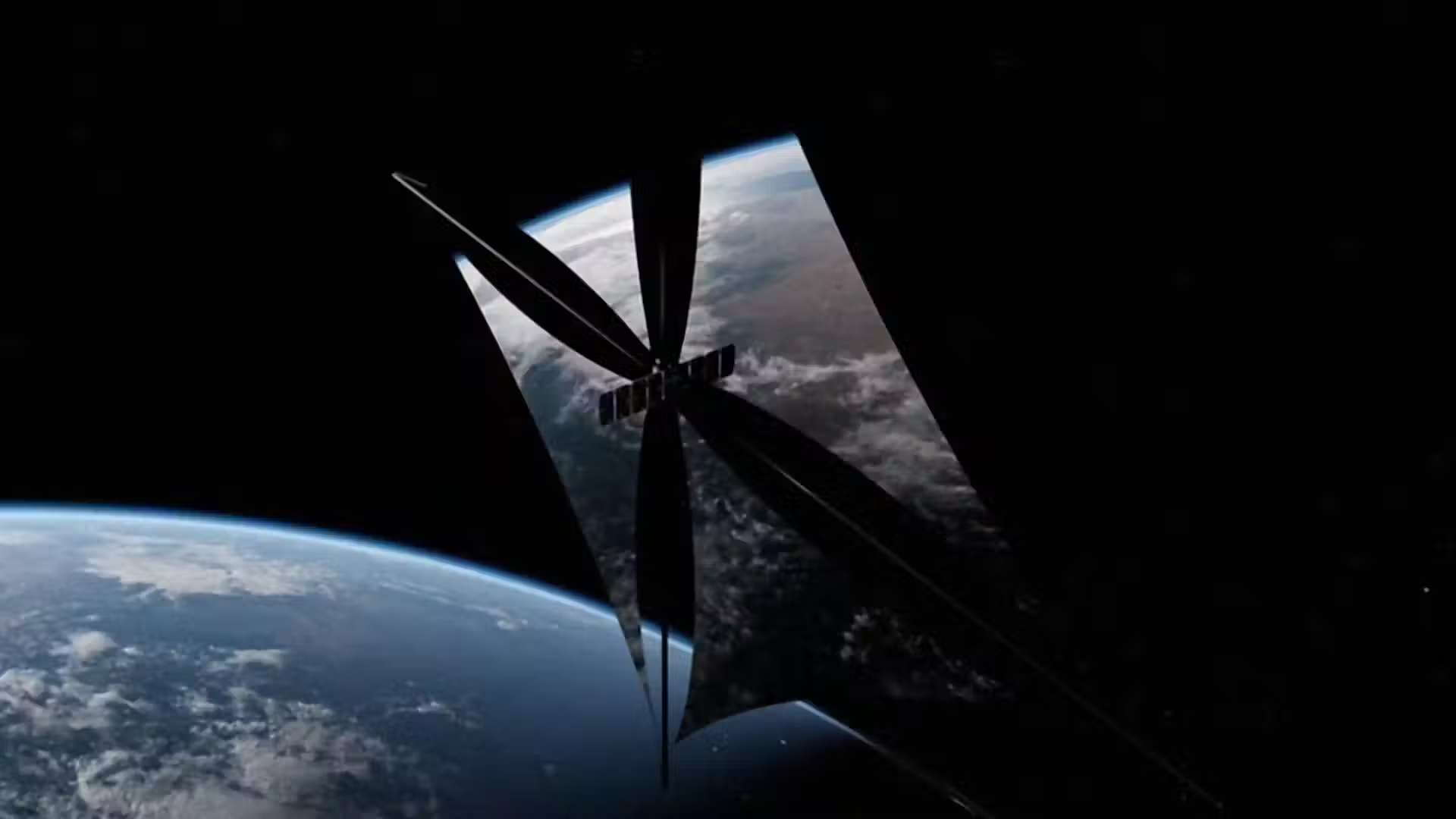
The US Federal Communications Commission authorized Reflect Orbital on July 9 to build, launch, and operate a mirror satellite in low Earth orbit. The experimental satellite, named Eärendil-1, will be capable of reflecting sunlight onto specific locations on Earth during nighttime hours.
Reflect Orbital, a Santa Monica, California–based startup, received clearance to deploy a single prototype satellite in low-Earth orbit later this year. The satellite will be equipped with a 59-foot, or 18-meter, reflective surface designed to redirect sunlight to specific areas on the ground after dark. According to the company, the reflected light could illuminate areas up to 3 miles, or 5 kilometers, in diameter during brief periods of time.
The technology aims to address a primary limitation of solar energy installations. By providing continuous light to solar panel systems at night through reflected sunlight, the satellite would allow these renewable energy sources to generate electricity around the clock. The company describes this capability as "on-demand" sunlight available to various industries.
Beyond the initial prototype, Reflect Orbital's long-term plans include launching and operating a constellation of approximately 50,000 satellites by 2035. The company has indicated the technology could serve multiple sectors, including solar energy, agriculture, and emergency response operations.
The project has drawn criticism from astronomers and environmental advocates concerned about potential impacts on optical astronomy. The FCC's authorization proceeded despite these concerns regarding how the satellite technology could affect astronomical observation and research.
The Trump administration provided approval for the project, clearing the way for the startup to proceed with construction and launch preparations for Eärendil-1.