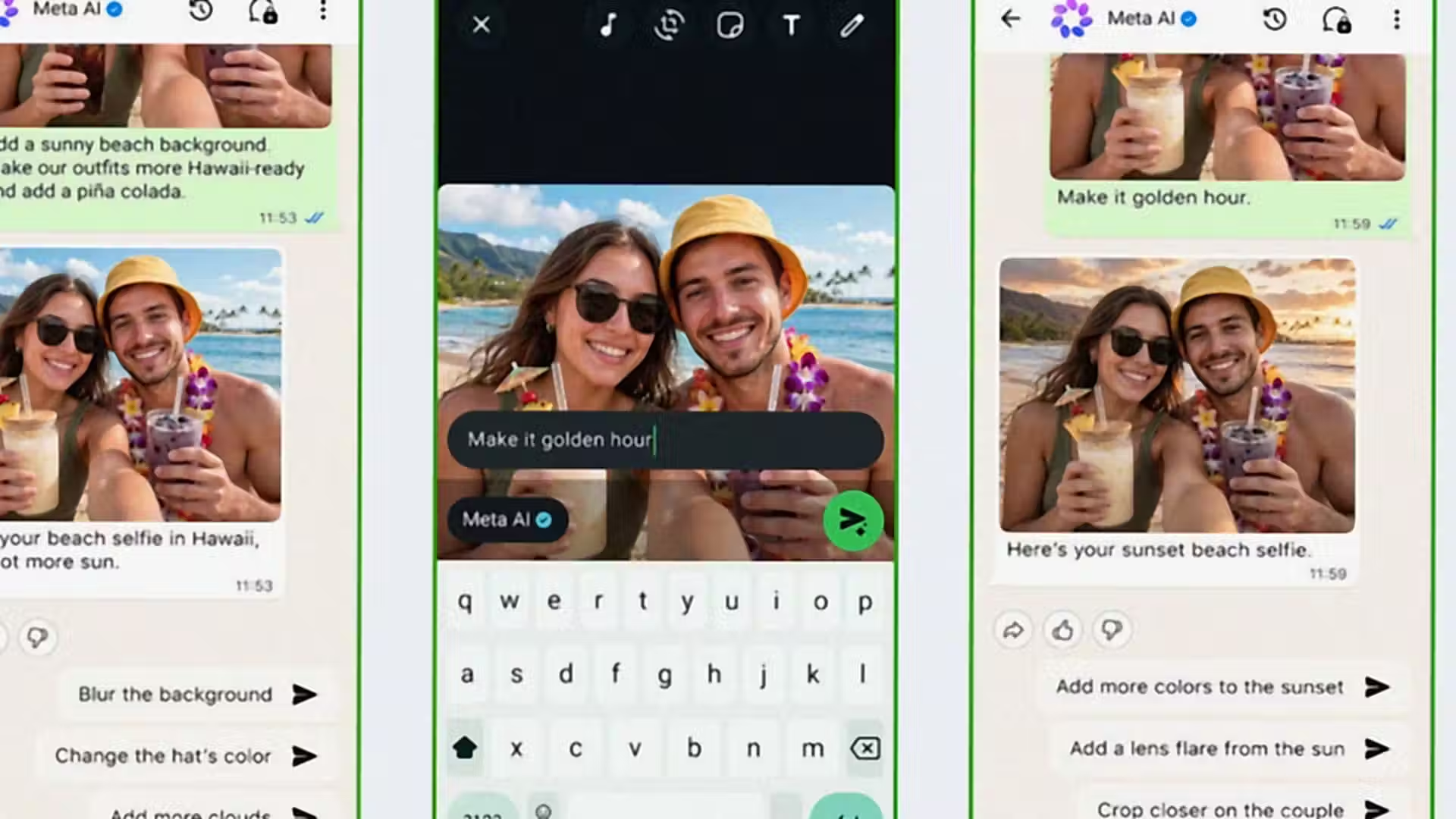
Meta has discontinued a feature of its new Muse Image AI tool that allowed users to generate artificial images based on content from public Instagram accounts, the company announced Thursday, just days after the feature's Tuesday release.
The feature, which let users tag public Instagram profiles to create AI-generated images pulling from faces and content in those posts, drew immediate criticism from privacy advocates and public figures. Account holders were not notified when their posts were integrated into the image generation process, and the feature was enabled by default for users with public profiles.
"Our intent was to provide a useful creative tool and to give people control over whether their public content could be referenced in this way," Meta said in an updated statement. "We've heard the feedback that this feature missed the mark, so it's no longer available."
The company had initially offered an opt-out mechanism buried in account settings, but the feature still generated significant backlash. Privacy advocates had recommended that concerned users switch their accounts to private as the most comprehensive solution to prevent their photos from being used by the tool.
Singer Shakira posted on social media Thursday criticizing the circulation of AI-generated images depicting her in situations that never occurred and alongside people she said she had never met. She noted that many of these fabricated images were being used in advertising campaigns for brands with which she had no commercial relationship. Shakira stated that her team was actively working to identify and remove such images, while expressing gratitude to fans who helped report AI-created content.
Actress Cate Blanchett launched a free platform Thursday allowing individuals to officially register how they wish their identity to be used—or not used—by artificial intelligence systems, as part of her broader campaign for AI regulation.
The Hollywood union SAG-AFTRA also criticized the feature, citing privacy concerns related to the unauthorized use of members' likenesses. Meta's Muse Image was the company's first major foray into AI image generation, but the default opt-in setting for public accounts meant that any user with a public profile could have their likeness used without knowledge or consent.
The feature had been available in multiple countries, including Brazil, where it activated image sharing with the Meta AI chatbot by default through simple @-mentions of public profiles. Private accounts were not integrated into the service.